March 17 Shamrock Gardens
March 17, 2019
As mentioned earlier, we pack light. Two pairs of pants, four shirts, and a skirt for the ladies for Mass. Wearing green was secod to utilitarianism.
Plus, we all forgot what day it was.
Good thing St. Patrick's Day really isn't a thing here.
First stop was Mass (in Japanese) at Saint Mary's Cathedral.
Since the building - originally a wooden Western-style church - was destroyed during World War II, when they rebuilt, they chose to focus on glorifying God in a way that blends in the Japanese culture rather than a knock-off European.
Since the building - originally a wooden Western-style church - was destroyed during World War II, when they rebuilt, they chose to focus on glorifying God in a way that blends in the Japanese culture rather than a knock-off European.
The building is made of stainless steel and concrete, which sounds horribly ugly, modern, and utilitarian.

And from the outside it looks like one of hundreds of other hideous modern churches.


And from the outside it looks like one of hundreds of other hideous modern churches.

Instead, it is stunning.
It was vast, soaring, and inspiring.
Now I get what all those other modern churches were going for
and failing at.
My photos simply can't do it justice, so skim through someone else's instead. Seriously. I'll wait.
The cathedral is famous for it's stainless steel organ.

Though there was much organ music, the communion song was not "One Bread, One Body"
Though there was much organ music, the communion song was not "One Bread, One Body"
There is a Lourdes grotto outside which is the most realistic we've yet seen. (apologies for the terrible lighting.)

They name their bells?


I'm very glad Josephine was saved from being melted.
Doesn't that sound like the plot of a children's book?

As we reach the end of the trip, the kids are craving more tastes of home.
Steven and I are craving signs written in Roman letter that we can read.


Freshness Burgers it is!
(the sign is green - is that enough?)
(the sign is green - is that enough?)

Note poor Karina, asleep on the counter as we wait for our food.
Though she was wearing green!
The woman who worked there had recently emigrated from India. Though I speak no Hindi, she also spoke English - and seemed quite relieved to take an order in a language she understood!
It was lovely get food without the point-and-hope method of ordering.
In honor of St. Patrick's Day, I got the Avocado & Prosciutto Burger.
Next we headed to the Tokyo Imperial Palace Gardens.
Visiting the Palace itself is difficult and supposedly underwhelming, but the gardens are open to the public and quite beautiful.
Upon first arrival, there is an exhibit of poetry by the Emperor and Empress. I'll give my musings as I show photographs, to avoid tl:dr syndrome.
Warning: poetry ahead.

Everywhere you went, the moment there were blossoms, trees were surrounded by photographers.
As usual, no photos were allowed in the museum, so I'll have to use some public ones of the couple mixed in with my flower photos.

There were poems and photos/portraits - many of which were taken by the Empress herself - from the last 65 years. It was fascinating reading about them and their history.

Of course, after I giggled at the tourists, I became one of them.
So many odd bits of trivia gleaned which were so lacking in any of our Western-based educational system.
Unlike England, which names its eras after the monarch (Georgian, Victorian, etc), Japan names the era when the Emperor is first enthroned. The ruler is technically called Emperor FirstName, though more often His Imperial Highness or simply The Emperor. His name is then posthumously changed to reflect the era.

Lamenting that I had left my 50mm fixed lens back at the apartment.
For example, Hirohito (the previous emperor from 1926-1989 - throughout the Second Sino-Japanese war and World War II. So basically the "bad Pearl Harbor guy" as our narrative so often simplifies) reigned in the Shōwa period, meaning "period of radiant Japan." After his death, he is now titled Emperor Shōwa.

Plum trees were also in bloom.
Emperor Akihito is so much less known and considered so much less important than his father. But he had so much work ahead of him trying to recover the country, the reputation, the reparations of his father's actions. His reign is called the Heisei period - "the period of peace everywhere."
Have I mentioned previously that he will be abdicating on April 30? He will be titled Emperor Emeritus Heisei. His son will reign in the Reiwa period - "the period of beautiful harmony"
This poem was written by the Empress as she pondered the Emperor's abdication.
On Your shoulders
Pours the early spring sunlight
Softly and gently
O, such a heavy burden
You bore, saying so little.
The Emperor is actually a noted ichthyologist and an expert on gobies. He has published numerous scholarly papers and has written portions of university textbooks on the species.

Them Empress, writing as their daughter left to be High Priestess at the Shinto Grand Shrine of Ise, struck a chord as I remembered my sister's serene eyes as she left for the convent.
"I now leave to serve
The deity soon to be moved
To a newly built shrine"
So saying with eyes serene
Our daughter left for Ise.
 Not taken by the child photographer. Nor by me.
Empress Michichiki was the first commoner to marry into the Imperial line. After 60 years of marriage - today, April 10th, being their anniversary - the love and devotion the Emperor and Empress have for each other is still so obvious and beautiful to see.
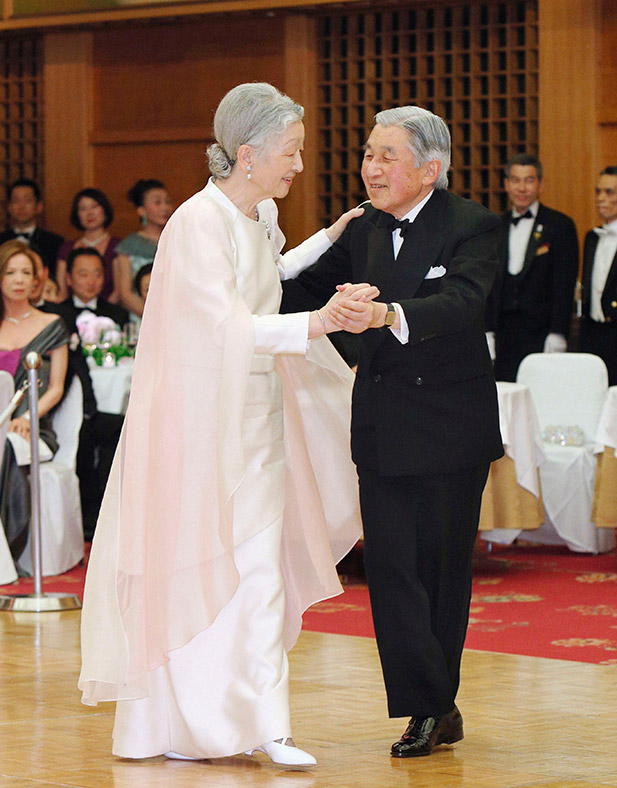
The Emperor, after 48 years of marriage
My day's duties done
And I quicken my footsteps
On my way back home
While the light of the moon
Shines down whitely on the path.
I love this photo, as she leans on him for strength.
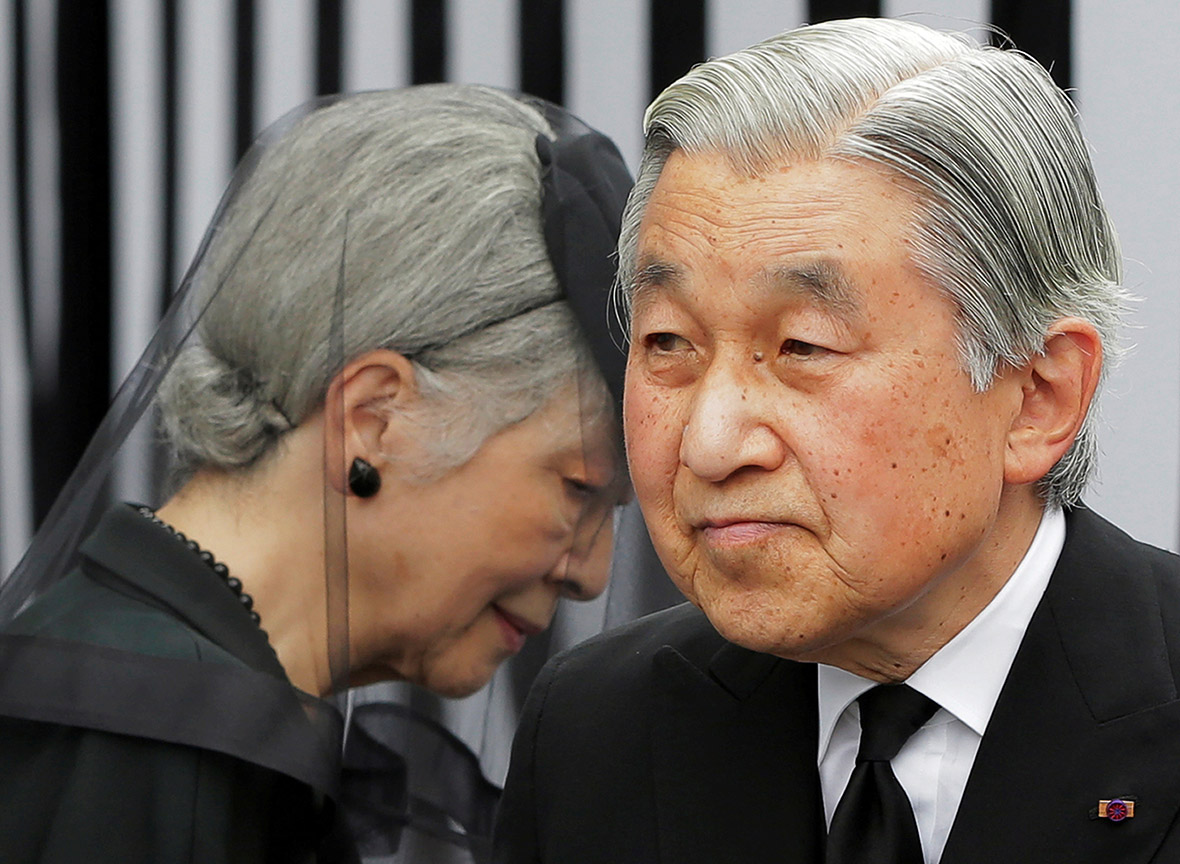
The Empress, on their 50th anniversary, meditating on their life.
As I walk by your side
The path stretches far ahead
Though 'tis now evening
Yonder in the distance
A glow of a lingering light.
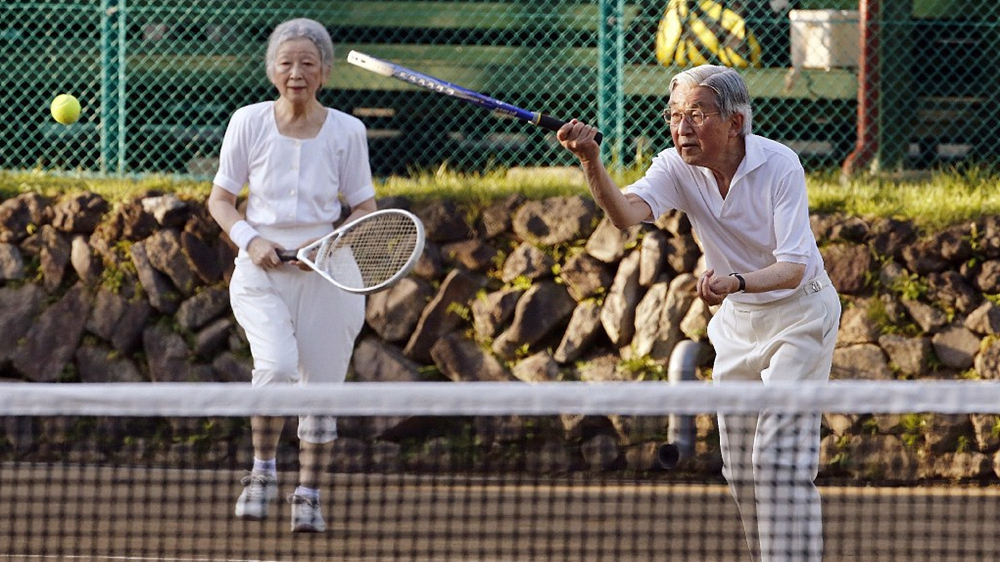
Playing tennis on the court where they met in 1957.

There were over 30 varieties of sakura (cherry blossom trees) in the garden so the season lasts longer. Most of them were just beginning to bud, while this one was already in leaf.
Okay, done with both trivia and poetry now.
But it really was an amazing exhibit.
If I've gotten any aspect of culture or history utterly wrong, please correct me!

After meandering through the gardens for a while, we ran across the White Tree of Gondor!
Though she was wearing green!
The woman who worked there had recently emigrated from India. Though I speak no Hindi, she also spoke English - and seemed quite relieved to take an order in a language she understood!
It was lovely get food without the point-and-hope method of ordering.
In honor of St. Patrick's Day, I got the Avocado & Prosciutto Burger.
Next we headed to the Tokyo Imperial Palace Gardens.
Visiting the Palace itself is difficult and supposedly underwhelming, but the gardens are open to the public and quite beautiful.
Upon first arrival, there is an exhibit of poetry by the Emperor and Empress. I'll give my musings as I show photographs, to avoid tl:dr syndrome.
Warning: poetry ahead.

Everywhere you went, the moment there were blossoms, trees were surrounded by photographers.
As usual, no photos were allowed in the museum, so I'll have to use some public ones of the couple mixed in with my flower photos.
There were poems and photos/portraits - many of which were taken by the Empress herself - from the last 65 years. It was fascinating reading about them and their history.

Of course, after I giggled at the tourists, I became one of them.
So many odd bits of trivia gleaned which were so lacking in any of our Western-based educational system.
Unlike England, which names its eras after the monarch (Georgian, Victorian, etc), Japan names the era when the Emperor is first enthroned. The ruler is technically called Emperor FirstName, though more often His Imperial Highness or simply The Emperor. His name is then posthumously changed to reflect the era.

Lamenting that I had left my 50mm fixed lens back at the apartment.
For example, Hirohito (the previous emperor from 1926-1989 - throughout the Second Sino-Japanese war and World War II. So basically the "bad Pearl Harbor guy" as our narrative so often simplifies) reigned in the Shōwa period, meaning "period of radiant Japan." After his death, he is now titled Emperor Shōwa.

Plum trees were also in bloom.
Emperor Akihito is so much less known and considered so much less important than his father. But he had so much work ahead of him trying to recover the country, the reputation, the reparations of his father's actions. His reign is called the Heisei period - "the period of peace everywhere."
Have I mentioned previously that he will be abdicating on April 30? He will be titled Emperor Emeritus Heisei. His son will reign in the Reiwa period - "the period of beautiful harmony"
This poem was written by the Empress as she pondered the Emperor's abdication.
On Your shoulders
Pours the early spring sunlight
Softly and gently
O, such a heavy burden
You bore, saying so little.
The Emperor is actually a noted ichthyologist and an expert on gobies. He has published numerous scholarly papers and has written portions of university textbooks on the species.
Them Empress, writing as their daughter left to be High Priestess at the Shinto Grand Shrine of Ise, struck a chord as I remembered my sister's serene eyes as she left for the convent.
"I now leave to serve
The deity soon to be moved
To a newly built shrine"
So saying with eyes serene
Our daughter left for Ise.

Empress Michichiki was the first commoner to marry into the Imperial line. After 60 years of marriage - today, April 10th, being their anniversary - the love and devotion the Emperor and Empress have for each other is still so obvious and beautiful to see.
The Emperor, after 48 years of marriage
My day's duties done
And I quicken my footsteps
On my way back home
While the light of the moon
Shines down whitely on the path.
I love this photo, as she leans on him for strength.
The Empress, on their 50th anniversary, meditating on their life.
As I walk by your side
The path stretches far ahead
Though 'tis now evening
Yonder in the distance
A glow of a lingering light.
Playing tennis on the court where they met in 1957.

There were over 30 varieties of sakura (cherry blossom trees) in the garden so the season lasts longer. Most of them were just beginning to bud, while this one was already in leaf.
Okay, done with both trivia and poetry now.
But it really was an amazing exhibit.
If I've gotten any aspect of culture or history utterly wrong, please correct me!

After meandering through the gardens for a while, we ran across the White Tree of Gondor!

Outside the gardens under the sakura in bud.
Karina and Irene, posing authentically.

The corner of the moat where it leads into the section where the Imperial family lives. I think this was the guardhouse.


The outer moat, a mile further back.

Tokyo Station - a building which was NOT destroyed. It's the original from 1914.
It is so huge that at times it's actually faster to go one station further and walk back than it is to walk across the length of the station.
We had managed to spend nearly 3 weeks in Japan and - as previously mentioned - since half our people don't like fish and the other half don't like sushi (yeah. I still don't get it either.), nary a sushi has been had.
With only 2 dinners left, we finally tried conveyor belt sushi!

A basic plate is 110yen (roughly $1 USD)

Price of the plates goes up based on fanciness and size. In the back you can see a 300 yen sampler plate that has 3 pieces - roasted salmon, smoked salmon, and raw salmon.
The different colored plates indicate the price and allow you to tally your bill at the end.
The different colored plates indicate the price and allow you to tally your bill at the end.

Note the tentacles on the far right.
The seats are bar-style single file in a U-shape with the kitchen in the back. The lower level is pre-made pieces.
You can also order on the computer and they will special order, sending it sliders on the top level.
This is great if you don't like wasabi. Every conveyor plate had wasabi. But even if it's St. Patrick's Day, I will not eat wasabi.
The seats are bar-style single file in a U-shape with the kitchen in the back. The lower level is pre-made pieces.
You can also order on the computer and they will special order, sending it sliders on the top level.
This is great if you don't like wasabi. Every conveyor plate had wasabi. But even if it's St. Patrick's Day, I will not eat wasabi.

Rebecca got this thinking it was.. I'm not sure. But something that is not eel.
However, it was eel.
She said it was still pretty tasty - like a light, flakey white fish. And now she can say she's eaten eel!
However, it was eel.
She said it was still pretty tasty - like a light, flakey white fish. And now she can say she's eaten eel!

Karina discovers she is not a fan of real tuna along with canned.

And their smoked duck was incredible.
Not pictured: the piles of plates at the end.
Not pictured: the piles of plates at the end.
Total step count - 8.75 miles
Comments